English
 Russian
 Spanish
 Arabic
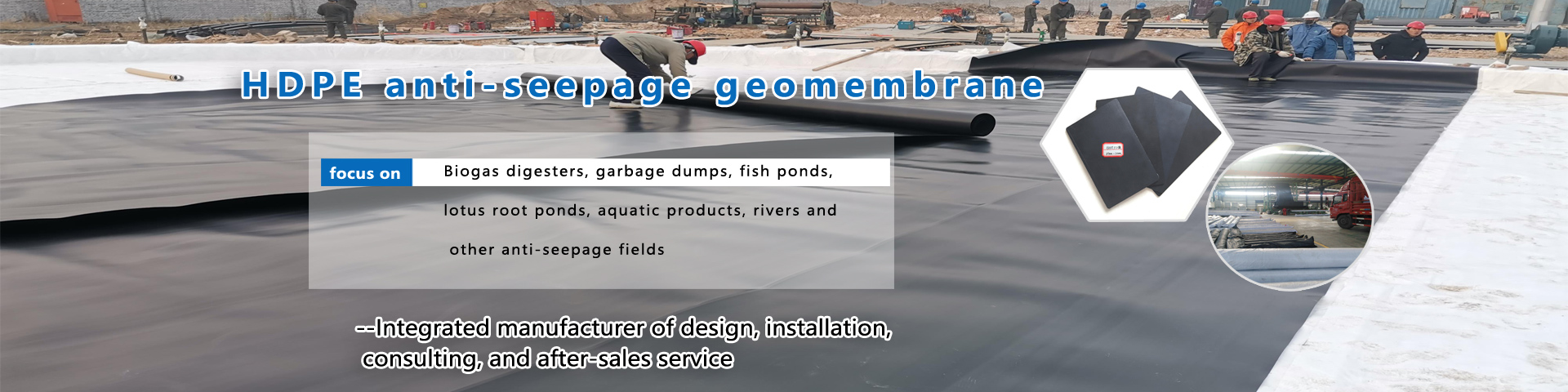
Every railway tunnel is a high-stakes engineering challenge. Beneath the trains, the unseen foundation — the pavement structure — determines long-term safety, performance, and maintenance costs. The critical component within this structure? The geotextile fabric. Choosing the wrong one risks soil contamination, poor drainage, and accelerated track degradation.
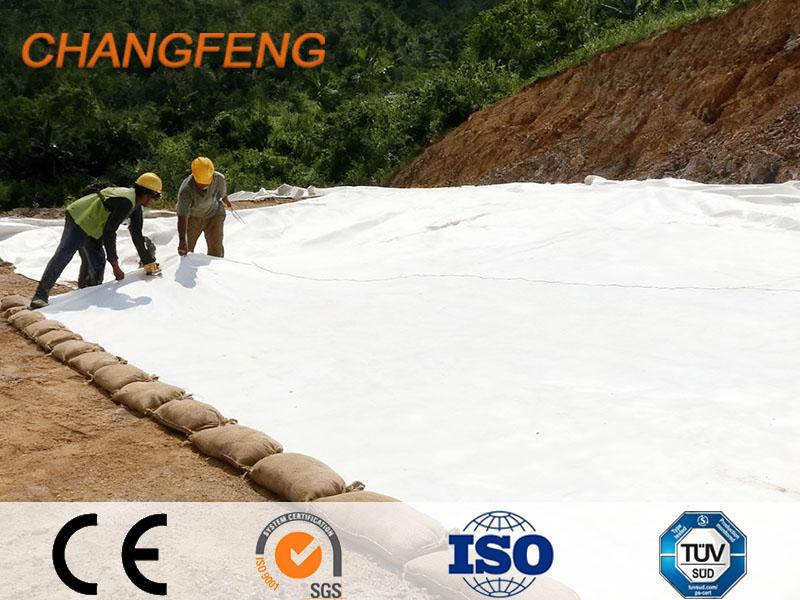
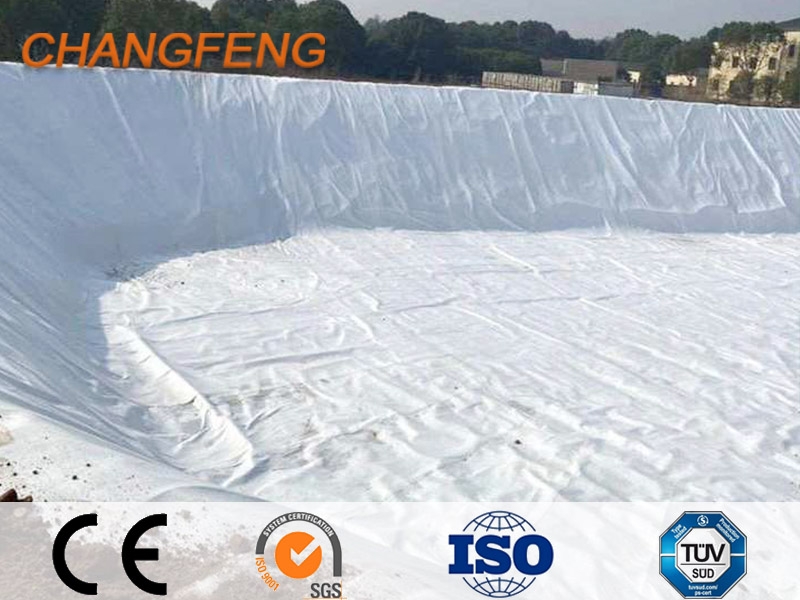 Investing in the best geotextile fabrics for railway tunnel pavement construction is a non-negotiable step for project managers and civil engineers. This guide cuts through the complexity to present the top-performing fabrics, backed by technical data and proven in demanding tunnel environments, to ensure your project achieves optimal stability and longevity.
Why the Right Geotextile is Non-Negotiable in Tunnel Construction
Tunnel environments present unique challenges: constant dynamic loading, limited ventilation, and potential for water infiltration. A premium geotextile acts as a multifunctional solution:
Separation: Prevents fine subgrade soils from mixing with the coarse ballast, maintaining structural integrity.
Filtration: Allows water to pass through while retaining soil particles, preventing clogging and erosion.
Reinforcement: Distributes heavy axle loads, reducing stress on the subgrade and mitigating rutting.
Protection: Cushions and protects waterproofing membranes from puncture by sharp aggregate.
The 8 Best Geotextile Fabrics for Railway Tunnel Pavement Construction
Our selection is calibrated for heavy-load, moisture-sensitive environments, focusing on products that excel in tensile strength, puncture resistance, and hydraulic performance.
1. High-Tensile Woven Polypropylene
The Best For: Primary load-bearing separation in main tunnel tracks.
Core Advantage: Unmatched tensile strength (40+ kN/m) and low elongation provide superior stability under continuous vibration and load.
Key Spec: Excellent resistance to biological/chemical degradation, ideal for confined tunnel atmospheres.
2. Needle-Punched Non-Woven Polyester
The Best For: Superior filtration and cushioning, especially near tunnel walls.
Core Advantage: Provides exceptional planar water flow (transmissivity) for lateral drainage and protects geomembranes with its thick, felt-like structure.
Key Spec: High permeability and puncture resistance, perfect for managing moisture ingress.
3. Composite (Woven/Non-Woven) Geotextile
The Best For: Complex subgrades requiring combined strength and drainage.
Core Advantage: A strategic 2-in-1 solution: the woven layer reinforces, while the non-woven layer filters and cushions. Ideal for variable soil conditions.
Key Spec: Multi-functional efficiency, reducing layer count and simplifying installation.
4. High-Modulus Woven Polyester
The Best For: Long-term reinforcement in high-stress zones (tunnel portals, transitions).
Core Advantage: Superior resistance to creep—minimal long-term stretching under permanent heavy load ensures decades of performance.
Key Spec: Exceptional durability and resistance to installation damage.
5. Heat-Bonded Non-Woven Geotextile
The Best For: Precision filtration where fine soil retention is critical.
Core Advantage: Engineered for uniform pore size, offering reliable, consistent filtration to prevent soil piping and migration.
Key Spec: Consistent structure and excellent chemical resistance in a thinner profile.
6. Ultra Puncture-Resistant Non-Woven
The Best For: Rocky or irregular subgrades with sharp protrusions.
Core Advantage: Specifically designed to withstand extreme puncture forces during aggregate placement and compaction, ensuring fabric integrity.
Key Spec: Exceptionally high CBR puncture rating (>2500 N), safeguarding against hidden subgrade hazards.
7. Drainage Composite (Geonet Core)
The Best For: Active, high-capacity water management in wet tunnels.
Core Advantage: The 3D geonet core laminated between geotextiles creates a dedicated drainage pathway, rapidly channeling water away from the track bed.
Key Spec: High in-plane flow rate for effective pressure relief and moisture control.
8. Anti-Clogging Fin Drain Sleeve
The Best For: Encasing perimeter and edge drainage systems.
Core Advantage: Optimized to filter water into drainage pipes while actively resisting clogging from silts and fines—a key to maintenance-free drainage longevity.
Key Spec: Engineered for sustained hydraulic performance under soil pressure.
Your 4-Step Selection Framework
Don’t guess. Use this framework to specify with confidence:
Define the Primary Function: Is it separation, filtration, drainage, or reinforcement? Your dominant need dictates the fabric type.
Analyze Site-Specific Threats: Conduct a thorough review of subgrade soil type, rock sharpness, water table, and chemical exposure.
Match Specifications to Stressors: Align tensile strength with traffic load, puncture resistance with subgrade condition, and permittivity with water flow.
Prioritize Verified Quality: Insist on suppliers who provide independent certification (e.g., GRI, ASTM) and project case studies.
Conclusion: Build on a Foundation of Certainty
The choice of geotextile is a decisive factor in the lifecycle cost and safety of a railway tunnel. By specifying one of these eight proven best geotextile fabrics for railway tunnel pavement construction, you move beyond hope to engineering certainty.
Ready to specify with confidence? Download our detailed Railway Tunnel Geotextile Specification Checklist to ensure your next tender or project plan includes all critical performance parameters.