English
 Russian
 Spanish
 Arabic
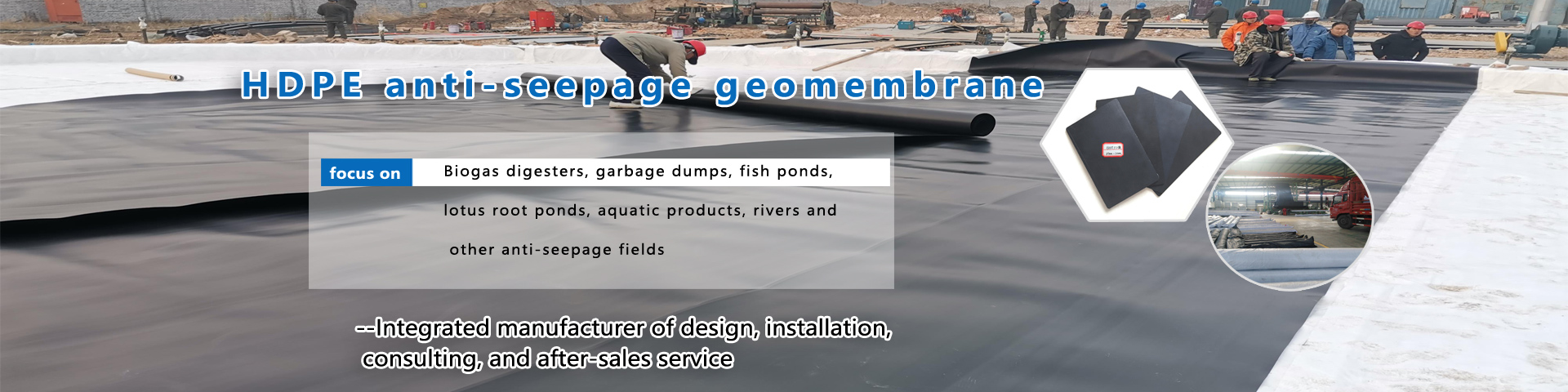
In an era where infrastructure demands resilience and environmental compliance is non-negotiable, selecting the right ground stabilization solution is critical for project success. For engineers, contractors, and project managers in civil and geotechnical fields, HDPE Geocells represent a paradigm shift in erosion control, slope protection, and load support. As a leading geosynthetics supplier, we provide not just materials, but engineered stability.
Why HDPE Geocells Are the Superior Choice for Modern Construction
Traditional methods of soil stabilization are often labor-intensive, environmentally disruptive, and prone to failure under stress. Standard High-Density Polyethylene (HDPE) Geocells offer a engineered, cost-effective alternative that delivers predictable, long-term performance.
Core Specifications & Advantages:
Material: High-grade HDPE or polypropylene, ensuring UV resistance, chemical inertness, and long-term durability.
Structural Integrity: High seam peel strength (10–14.2 kN/m) and tensile strength (16–22 kN/km) create a flexible yet monolithic mattress that confines and reinforces infill materials.
Proven Performance: Documented to reduce base course settlement by up to 50%, significantly extending the service life of paved and unpaved surfaces.
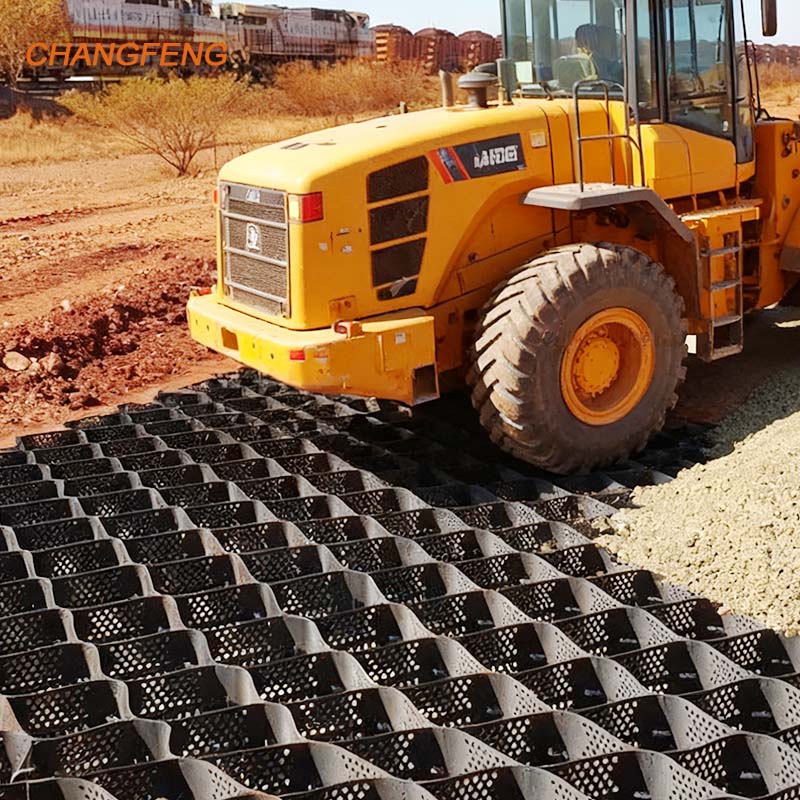
Versatility: Effective for slopes, channels, retaining walls, and load-bearing applications like road bases, driveways, and parking lots.
Engineered for Success: The Geocell Installation Protocol
Maximizing the performance of geocells hinges on precise execution. Our recommended (construction), distilled from global best practices, ensures optimal results.
Phase 1: Precise Site Preparation & Layout
Success begins with accuracy. The site must be graded and compacted. Critical (slope staking and layout) is performed using surveying instruments to establish the exact alignment and elevation. A base layer of geotextile is often recommended for separation. Clear reference lines are marked to guide the placement of the first geocell layer, ensuring the finished structure's alignment and profile.
Phase 2: Strategic Geocell Deployment & Anchoring
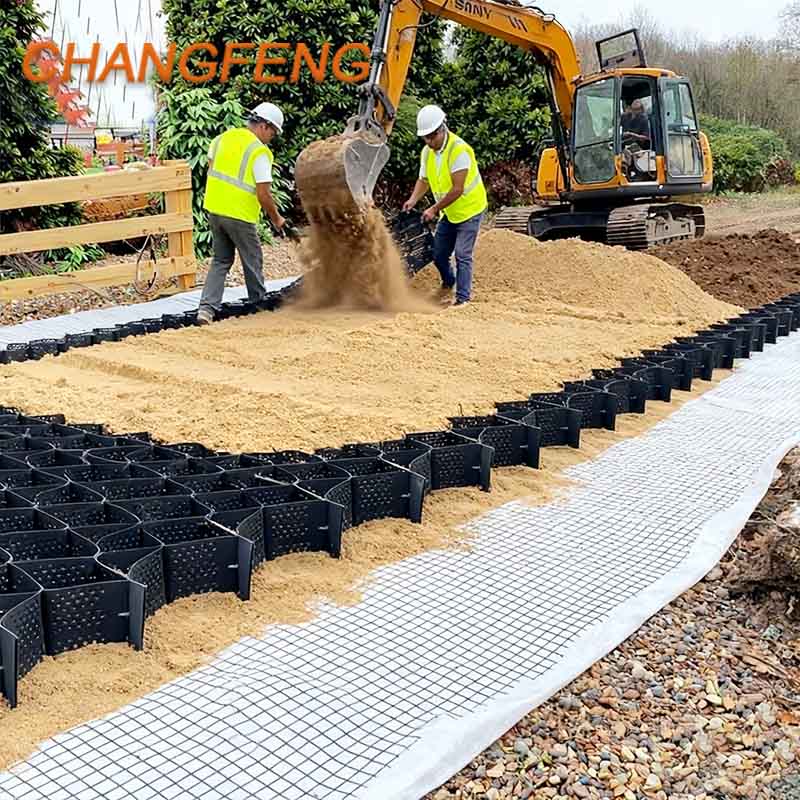
Panels are transported to the site in a folded state. During (honeycomb geocell installation), cells are carefully expanded and positioned according to the layout lines. They are immediately anchored at the perimeter and internally using stakes or anchor pins to prevent movement during infill. Proper tensioning is key to maintaining design geometry.
Phase 3: Systematic Infill and Compaction
This is the most critical phase. Infill material (typically aggregate, sand, or soil) is placed from the cell boundaries inward.
(Layered Backfilling and Compaction): Material is added in lifts to approximately two-thirds of the cell height and compacted using appropriate machinery (plates, rollers). This process is repeated until cells are filled to the top, creating a rigid, confined composite layer.
(Key Points): Use quality, well-graded infill. Ensure compaction is uniform to avoid panel distortion. For retaining wall applications, careful line-and-level adjustment during infill is essential for a uniform face.
Phase 4: Quality Assurance & Final Integration
A final inspection verifies fill levels, compaction, and alignment. The completed geocell layer is then integrated with the surrounding structures or topped with a surface course (asphalt, concrete, or vegetation).
Specialized Applications: Beyond the Basics
1. Slope and Channel Protection
For erosion control on slopes, proper anchoring upslope and detailed hydraulic analysis are paramount. Cells are filled with vegetation-supporting soil or rock, creating a permanent protective layer that resists runoff and promotes revegetation.
2. Retaining Walls & Load Support
Geocells form efficient gravity retaining structures. The key is the interlocking connection between layers and strict adherence to the infill/compaction protocol to ensure structural integrity and a clean, uniform face.
3. Performance in Extreme Conditions
HDPE's robust properties ensure performance in temperature extremes. In high-moisture environments, proper drainage design combined with geocells prevents saturation and maintains strength.
Case in Point: BaseCore HD for Sustainable Cost Savings
Consider a commercial parking lot project requiring a stable base over soft subgrade. Using BaseCore HD Geocells (100mm cell height, approx. $0.50–$1.00/sq. ft.) allows for a reduced aggregate thickness while meeting load-bearing requirements. The result? A reduction in aggregate volume by up to 40%, lower transportation costs, faster installation, and a foundation that resists rutting and settlement—delivering both immediate and lifecycle cost savings.
Partner with a Supplier Who Understands Engineering
Choosing a supplier is about more than price per square foot; it's about access to technical expertise, material consistency, and project support. We supply certified, high-specification HDPE Geocells and provide comprehensive technical guidance—from design review to installation oversight—ensuring your project achieves its engineering and financial goals.
Ready to build more resilient, efficient, and sustainable projects?
Contact our engineering support team today for a project consultation or to request material samples and specifications data sheets. Let us help you translate geocell technology into your competitive advantage.